
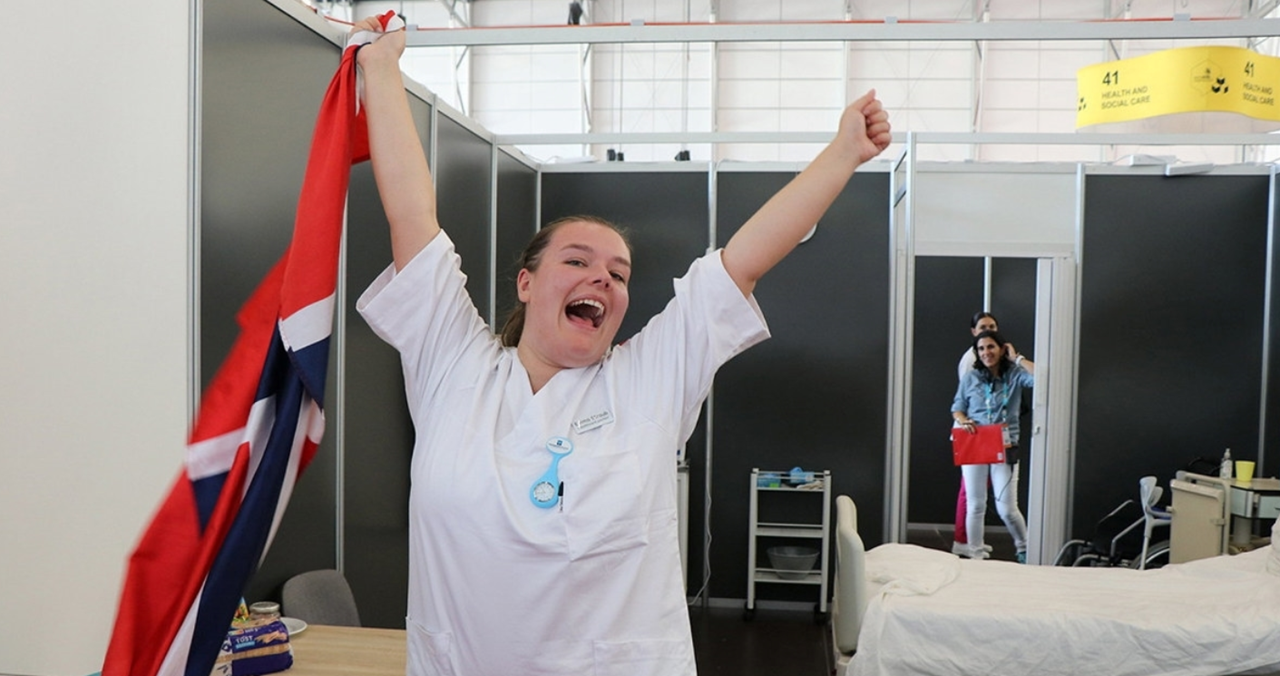
The healthcare, and early childhood sectors are facing major challenges in the years ahead. Through the HO 2.0 model, we have developed an innovative, technology-driven, and future-oriented education that meets the needs of tomorrow. The model is now being tested at our school.
Innovation in practice
Through partnership processes, the project aims to explore key elements of a new and forward-looking model for education in healthcare, and early childhood development. The goal is to meet future workforce demands and emerging, yet largely unknown, competence requirements.
This includes strengthening students’ vocational skills as well as promoting 21st-century skills, such as communication, creative thinking and innovation, collaboration and teamwork and critical thinking.
Media coverage (Norwegian written articles)
Flere og bedre helsefagarbeidere (Adresseavisen - januar 2026)
Musikk og nytenkning skal styrke utrdanningen (Nord Universitet - desember 2025)
Får jobbe to dager i uka hele året (Utdanningsnytt - april 2026)
Enhelstelder (HVS) og avdelingsleder (SFO) forteller litt om samarbeidet (Cissi Klein - april 2026)
We have established collaboration agreements with:
- Lilleby School
- Strindheim School
- Ladesletta Kindergarten
- Fjæraskogen Kindergarten
- Sjiraffen Culture and Competence Centre
- The City Mission
- Unique Families (BUF-Dir)
- Valentinlyst Health and Welfare Centre
- Høyset Health and Welfare Centre
- Strinda Home Care Services
- St. Olavs Hospital
- Trondheim Rehabilitation Centre
- Activity Services for Home-Dwelling Residents
- Centre for Healthcare Simulation (NTNU)
The HO 2.0 Model
The Health Personnel Commission’s report provides a comprehensive assessment of future needs for healthcare personnel and competencies towards 2040. It highlights a significant shortage of personnel within the health and care services, particularly among healthcare workers and nurses. At the same time, both the health and early childhood sectors are facing recruitment challenges, high staff turnover, increased sick leave, and a doubling in the number of young people outside the workforce over the past ten years. There is little doubt that Norway’s welfare services within health, care, and early childhood are under considerable pressure.
The Director of Education in Trøndelag County was a member of the Health Personnel Commission. As part of the cooperation agreement between Trøndelag County and NTNU on education, research, innovation, and dissemination, he proposed in 2022 a potential collaboration with NTNU on planning a new upper secondary school in Trondheim—Cissi Klein Upper Secondary School—with a focus on future-oriented education and smart technology within health and early childhood services. Through this agreement, a joint project between Trøndelag County and NTNU was established to address the competence needs and challenges identified by the Commission.
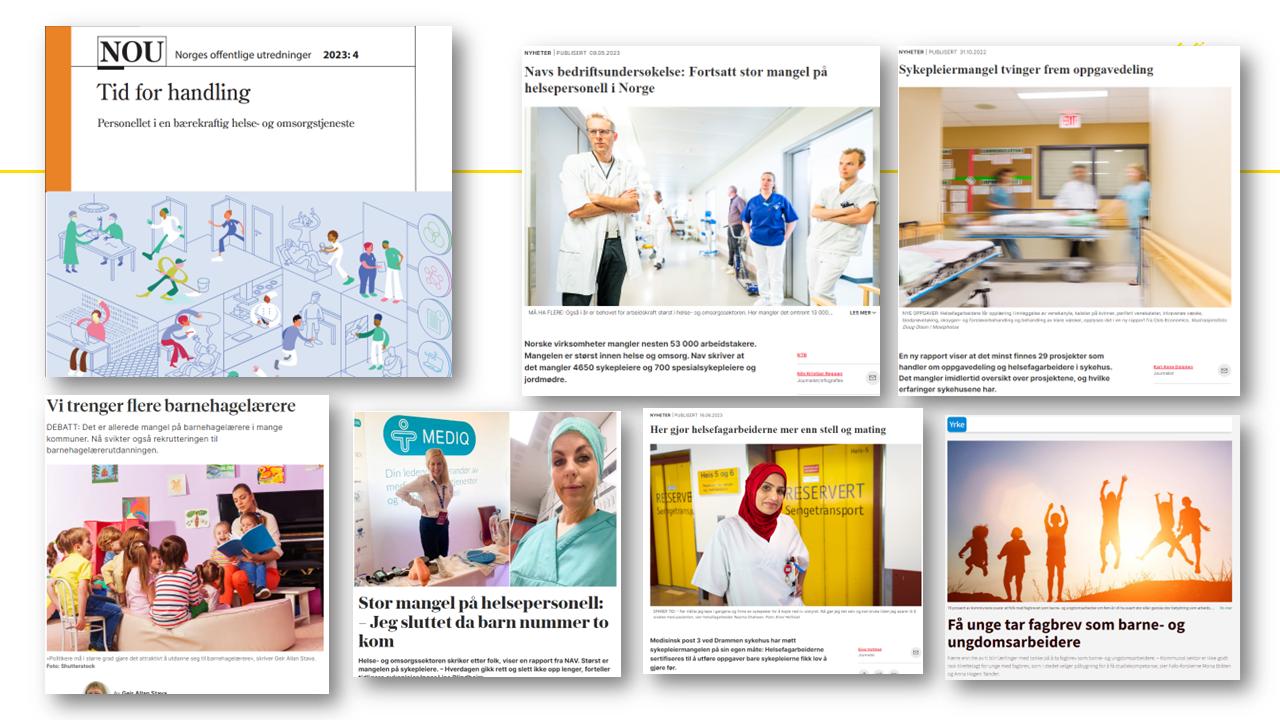
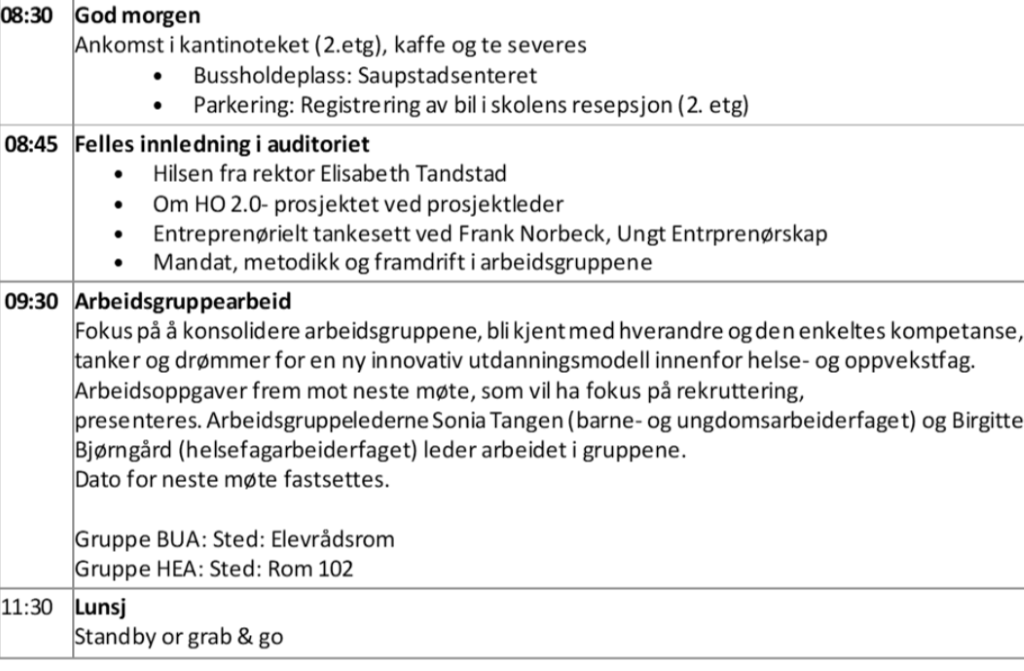
The work began in spring 2023 with the development of a project plan. The main objective was to create an innovative, technology-driven, and future-oriented educational model within Health and Early Childhood programmes at Cissi Klein Upper Secondary School, in collaboration with key stakeholders in Trøndelag. Together, these partners aimed to identify, develop, and anchor key measures within a model designed to meet future challenges. The model was envisioned as a “2.0 version,” where learning through entrepreneurship plays a central role—in short, a future-oriented model for health and early childhood education.
During the two-year project period, the HO 2.0 model has been developed in collaboration with key stakeholders in Trondheim, Trøndelag, and across Norway. This includes various units within Trondheim Municipality, Trøndelag County, non-profit organizations, and private sector actors. In addition, the work on the HO 2.0 model has been firmly anchored in educational and research environments in Trøndelag, both at NTNU and Nord University. The project has served as a catalyst for collaboration across sectors and administrative levels.
The model, along with its framework, measures, and core elements, is presented in this report. The framework includes health-promoting learning environments, learning through entrepreneurship, and the use of digital technology. Together, these form the key instruments of the model, with the aim of educating young people to take care of their own health, manage future working life, and be prepared to live meaningful and sustainable lives.
Authentic learning environments form the core of the model. In this project, this includes close and formalized collaboration between Cissi Klein Upper Secondary School and four units within Trondheim Municipality (two health and welfare centres, one kindergarten, and one primary school). Practical training in workplaces will take place two days per week throughout much of the school year. Teachers will be present with students at the workplace throughout the entire working day, and parts of traditional teaching will also take place on-site. In other words, there is a stronger integration between school and practice than is traditionally the case.
The model will be piloted at Cissi Klein Upper Secondary School in autumn 2025 and will be followed by systematic research. The project also represents an important contribution to the government’s targeted social mission of including more children and young people in education, work, and society. The report Children and Young People First – Our Responsibility aims to strengthen the connection between practice, innovation, education, and research.
Through collaborative processes in two working groups, systematic literature reviews of key concepts in the model, previous research by several project participants, and discussions within the steering group, we have developed a theoretical framework that underpins the model. This framework consists of three main concepts health-promoting learning environments, learning through entrepreneurship and digital technology.
Together, these provide the foundation for the model’s measures, with the aim of educating resilient young people. Through upper secondary education, students will develop the competence needed to take care of their own health, navigate future working life, and be equipped to live meaningful and sustainable lives.
Health-Promoting Learning Environments
Health-promoting theories have previously been used to understand the relationship between the school environment (for example, health-promoting schools) and learning. According to these theories, learning and competence development are in themselves health-promoting, and schools are considered an important setting for promoting young people’s health. Health-promoting learning focuses on the learner’s resources. The learner is viewed as an active, self-developing, and creative individual with their own will and ambitions. The whole person is involved in the learning process—whether it takes place in school or in the workplace—and learning and health promotion interact in a reinforcing loop.
This perspective is closely linked to salutogenic theory, which focuses on life mastery and how individuals perceive their experiences as comprehensible, manageable, and meaningful. The theory helps explain how students’ mindsets influence how they collaborate, learn, and relate to others. Research shows that health-promoting learning environments are a key factor in helping young people manage educational stress and in reducing stress in working life, particularly among healthcare professionals.
Adolescence is a life phase characterized by major physical, psychological, and social changes. Experiencing stress during this period is both normal and essential for development. The impact of stress on health depends on both vulnerability and protective factors, within the individual and in their surroundings.
Health-promoting measures in education are therefore fundamental for ensuring that students develop resilience, well-being, and the ability to reach their full learning potential.
Research further shows that many students in health and early childhood education do not complete their education. Lack of belonging, loneliness, and mental health challenges are among the main reasons. A lack of meaning and limited language skills among minority students are also contributing factors.
While the importance of health-promoting workplace environments has long been recognized, the role of health-promoting learning environments in education has received less attention—despite being equally important.
Learning Through Entrepreneurship
Since 2004, Norwegian education policy has emphasized entrepreneurship as a priority across all levels of education. Despite this, entrepreneurial approaches have not yet become fully embedded in teaching practice.
Learning through entrepreneurship—also referred to as entrepreneurial learning—is a hands-on approach where students gain knowledge and skills through practical, real-life activities that promote understanding and deeper learning. Learning activities are based on coherence and relevance, where both content and organization are designed to meet students’ needs in a future-oriented perspective. Students take on an active and autonomous role, with learning grounded in their own experiences to create relevance and meaning. Collaboration toward shared learning goals is central.
This approach strengthens students’ personal resources, such as self-awareness and understanding of their own abilities, while also enabling them to experience the added value of working with others who bring different skills and perspectives.
Studies in upper secondary education show that participation in entrepreneurship education is linked to increased motivation, effort, and performance. Research also demonstrates positive effects on soft skills and attitudes, including planning and organization, leadership and decision-making, initiative and goal setting, perseverance and creativity, opportunity recognition, communication, independent and team-based work.
Learning through entrepreneurship is therefore a strong framework for the model’s measures, particularly in light of the competencies required in the future health and early childhood workforce.
Digital Technology
Digitalization plays a key role in vocational education and training, as there is close interaction between learning in school and in the workplace. Rapid developments in robotics, automation, artificial intelligence, and digital systems are transforming working life across sectors. Within health and early childhood education, technology can be a valuable tool for developing entrepreneurial competencies. Digital platforms—such as collaboration tools and virtual learning environments—enable students to work together across time and location, while supporting new forms of communication and idea-sharing.
Technology can also be adapted to different learning styles and needs, which is essential in entrepreneurial learning. Digital learning allows for individualized progress, where students can learn at their own pace and focus on areas they wish to improve. For example students with another first language can practice Norwegian using apps and virtual reality (VR), simulation tools and VR can provide realistic patient scenarios, allowing students to practice problem-solving and decision-making in safe environments.These types of learning activities support not only subject knowledge, but also the development of innovation and critical thinking skills.
The use of assistive technology in education strengthens students’ digital competence—an essential skill for their future professional practice, particularly as the use of welfare technology continues to grow.
Through the process of developing an innovative, technology-driven, and future-oriented education model for Health and Early Childhood programmes, efforts have focused on identifying, developing, and anchoring measures that support the recruitment, education, and retention of skilled workers at upper secondary level. The model primarily addresses how education should be delivered, but we believe that this approach will also have a positive impact on recruitment to professions within the health and early childhood sectors, as well as on long-term motivation to remain in these occupations.
The different elements of the model influence each other both directly and indirectly. For example, the way teaching is organised can contribute to building a strong reputation for the programme, which in turn may increase interest and recruitment. At the same time, the framework and measures within the model are designed to support the development of resilient and innovative skilled workers for future health services. We believe this will strengthen both the ability, willingness, and motivation to remain in these professions over time.
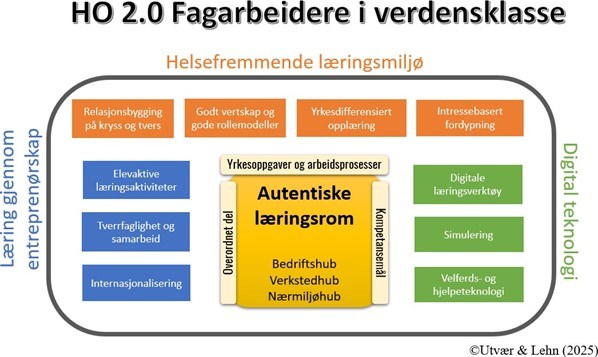
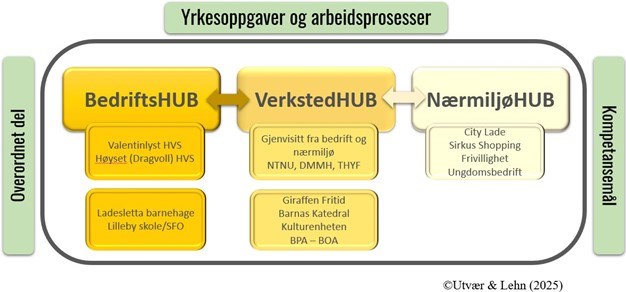
Authentic learning environments form the core of the model. The term authentic refers to something that is real and trustworthy. In this project, it involves extensive and close collaboration between Cissi Klein Upper Secondary School, four units within Trondheim Municipality, several local businesses, and relevant academic environments at universities and vocational colleges, all of which have actively chosen to participate in the project. Examples of this collaboration can be found in Appendix 5.
Within the model, this is illustrated through three hubs: the Business Hub, the Workshop Hub, and the Community Hub. Research shows that authentic learning environments are central to the qualification of skilled workers, with the aim of preparing them to succeed in future roles within the health and early childhood sectors.
Curriculum and Workplace Tasks and Processes
The Norwegian National Curriculum for Knowledge Promotion 2020 (LK20) consists of a core curriculum, subject distribution, and subject-specific curricula. The core curriculum sets the overall direction for education across all levels of compulsory schooling and elaborates on the fundamental values outlined in the Education Act. It is structured around three main areas: values and principles for education, principles for learning, development and formation, and principles for school practice. Within these, interdisciplinary themes such as public health, democracy, and sustainable development are central, while inclusive learning environments and adapted education are emphasised as key principles for school practice. The core curriculum ensures a holistic approach to teaching and supports the school’s broader societal mission.
The competence aims within Health and Early Childhood programmes describe what students are expected to know and be able to do upon completing their education. The subjects include common programme subjects, core subjects, and in-depth vocational specialisation. The common programme subjects address areas such as health promotion, communication and interaction, and working life within the health and early childhood sectors. In collaboration with the four units in Trondheim Municipality, we aim to complement the curriculum by placing greater emphasis on workplace-specific tasks and processes in daily training. Learning in vocational education is often described as practice-based and experience-based, closely linked to real work tasks and contexts. Vocational pedagogy encompasses a range of ambitions and principles for teaching practices that bridge school and working life, and that are closely aligned with the competence needs of the labour market.
Within the model, the meeting points where key stakeholders collaborate and work towards shared goals are referred to as hubs, specifically the Business Hub, the Workshop Hub, and the Community Hub.
Below is a description of the different measures designed to support students’ learning in authentic learning environments. These measures are presented within the framework of the three core pillars: innovation, health-promoting learning environments, and digital technology.
Within a health-promoting learning environment, learning is understood as a dynamic interaction between students’ individual resources and their psychosocial and physical surroundings. The salutogenic approach views individuals as active, self-developing, and creative, with their own ambitions and capacity for growth, shaped by life experiences, learning processes, and environmental influences throughout childhood and adolescence. The measures developed within this perspective aim to strengthen students’ learning and development in authentic contexts, as described in more detail in the project report.
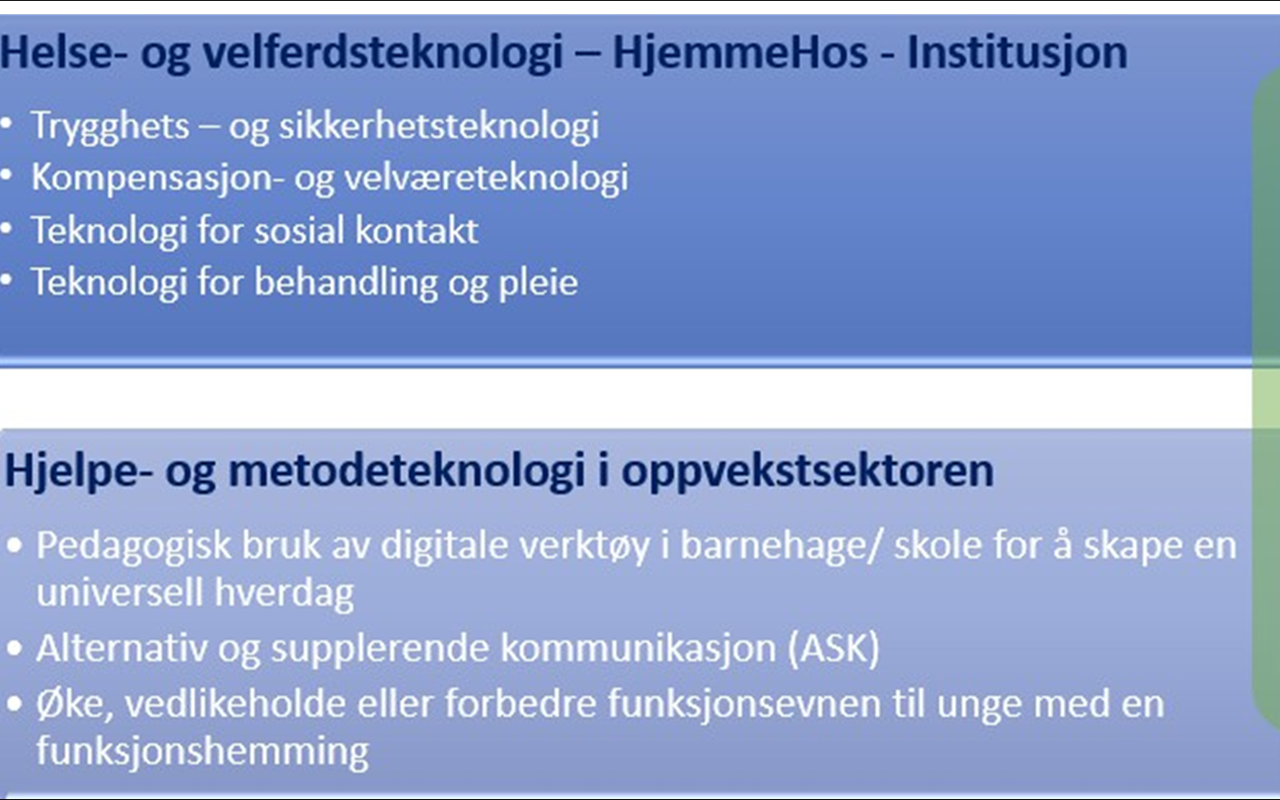
The model is also grounded in a relational understanding of technology. This means that while we shape and influence technological development, technology in turn shapes and influences us. Technology is therefore understood not as something isolated or neutral, but as an integral part of social, cultural, and material processes. It exists within a complex interaction between people, society, and context. Within the professional digital competence framework for teachers, digital technology is defined as products and services used for communication, information sharing, organisation, production, storage, and protection of digital content. In educational settings, assistive technologies are seen as tools that support learning, while in professional practice they are understood as welfare technologies.
In this model, digital technology plays a key role in supporting learning in authentic environments by enabling new forms of collaboration, simulation, and practical training in safe yet realistic settings. At the same time, it contributes to strengthening students’ digital competence, which is essential for their future professional roles.
Previous work processes (2023–2024)
Start-Up Workshop for the HO 2.0 Project
Time for action – but what actions?
- You can view the invitation to the workshop here.
-
You can read the news article here.
Delkaterliste:
A list of participants is available here.
The following presentations were shared during the workshop (In norwegian):
The project aims to develop a pedagogical model. The model is based on three overarching themes that form the project’s educational foundation, with entrepreneurial learning as the main approach.
These themes include pedagogical entrepreneurship, new and innovative technology—such as digital learning activities and tools—and relationships.
The project has established two working groups, one focusing on child and youth care and the other on healthcare. At present, the groups consist of selected resource persons.
The working groups will carry out their work based on this methodology.
On 30 January 2024, a new workshop (W1) was held as part of the project. One of the project’s interim objectives is to identify and implement new recruitment measures. The theme of Workshop 1 was: “How to recruit” into Health and Early Childhood programmes.
Key questions for the World Café session
Summaries will be presented in early summer 2024.
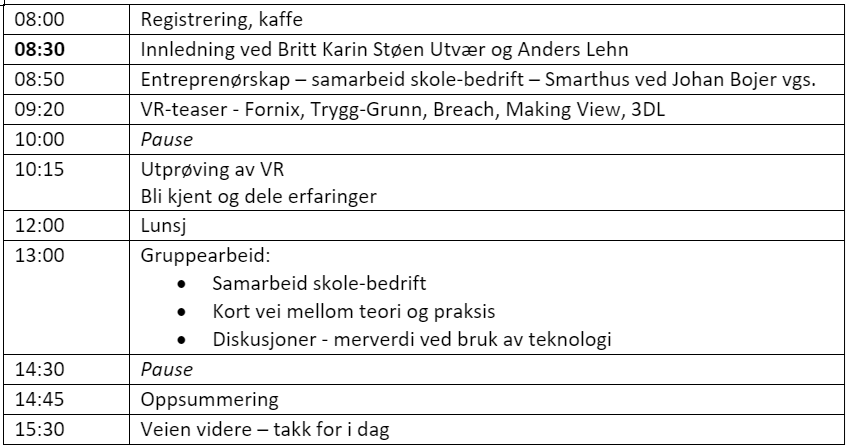
Workshop 2 focuses on “How to educate” students within Health and Early Childhood programmes at upper secondary level. Approximately 50 participants are registered for the Workshop 2 conference.
The programme is as follows:
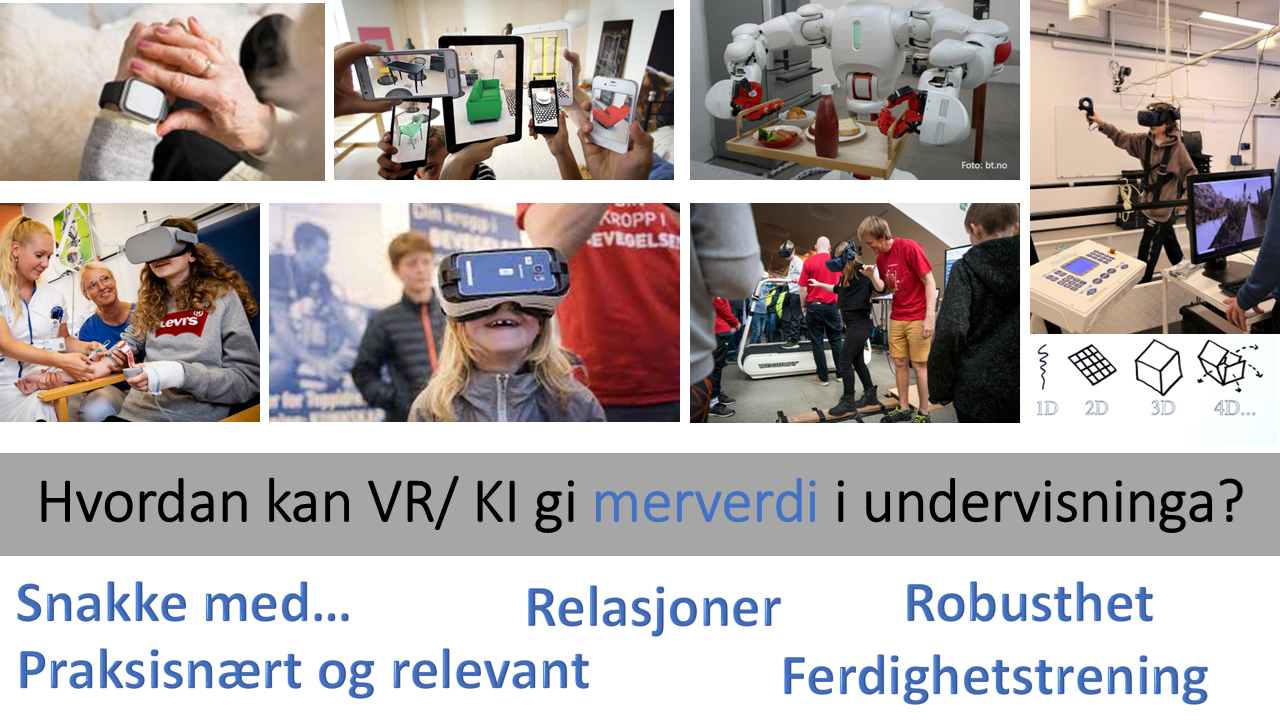
One of the main themes is the use of VR and AI in education. Here are some examples (YouTube):
- How to get started with VR.
- VR as a tool in the training of healthcare personnel.
- VR in both vocational and academic programmes.
VR providers visiting Workshop 2:
- Breach: Projects - Breach VR - Building Better Realities
- Trygg-Grunn: https://youtu.be/ZHbpD8gjvss?feature=shared
- Making View: Mental health | Making View AS
- Fornix: Products | Fornix VR
- 3DL: 3DL
Workshop 3 focuses on RETENTION
- students in upper secondary education
- apprentices during their apprenticeship period (and especially in the transition into apprenticeship)
- skilled workers in their respective professions
Programme for the day
Venue: County Council Chamber, 5th floor, County Hall, Trondheim
- 08:00–08:30 Coffee and informal networking
- 08:30–08:40 Welcome by Britt Karin and Anders
- 08:40–09:15 Introduction: Retaining students, apprentices, and skilled workers by Anne Marit, Hege, and Bibbi
- 09:15–09:20 Introduction to group work
- 09:20–09:30 Break
- 09:30–10:30 Group work across working groups
- 10:30–10:40 Break
- 10:45–11:20 Summary from the groups
- 11:20–11:30 The way forward by Britt Karin and Anders
- 11:30 Lunch
About the project
The main objective of the project is to develop an innovative, technology-driven, and future-oriented education within health, care, and early childhood development, where entrepreneurship is a key learning strategy. Digital and technological skills are essential competencies for the future.
A partnership has been established with key stakeholders in Trondheim to collaboratively develop elements of the model. The project will be researched to generate new knowledge that enables schools to work more effectively and intelligently.
The model is currently being piloted at Cissi Klein Upper Secondary School.
Impact Objectives
Through the partnership process, the project aims to explore elements that can be further developed to pave the way for an innovative and future-oriented model for a different approach to health, care, and early childhood education, meeting future workforce needs and emerging, yet unknown, competence requirements. This applies both to students’ vocational skills and to the development of 21st-century skills, including communication, creative thinking and innovation, collaboration and teamwork, as well as critical thinking.
Through the project, we aim to be innovative, think differently, and explore new ways of integrating technology into learning processes. The project will be subject to research in order to generate new knowledge that enables schools to work more efficiently.
Entrepreneurial learning will be the main educational strategy. As part of the project, specific objectives include increasing the recruitment of boys to programmes that are traditionally female-dominated, as well as addressing the challenge of students who do not secure apprenticeships. It is also recognised that many students with minority language backgrounds experience difficulties in obtaining apprenticeships, and the project aims to contribute to positive developments in this area.
The scope of this initiative is extensive, and achieving tangible results requires long-term, continuous effort supported by ongoing evaluation to guide the process. In addition, a research-based perspective is considered highly valuable.
The project focuses on the initial phase of this work. This phase consists of several sub-phases, as outlined in the timeline. Following the initial phase, the intention is for a working group to present a model that will then be piloted at Cissi Klein Upper Secondary School. The pilot phase will, in itself, constitute a new project. The specific elements and impact objectives that will emerge during the project period may be difficult to predict in detail. However, it is expected that the model will develop with the following focus:
- The partnership has developed an attractive education programme in health and early childhood studies, initially piloted at Cissi Klein Upper Secondary School
- Close, reciprocal, and binding collaboration between partners contributes to teaching, provides attractive placements for practical training, and offers apprenticeship opportunities
- Students develop an entrepreneurial mindset and participate in processes where they generate ideas and further develop skills related to new welfare technology
- Entrepreneurial learning is the main educational approach, and student-run enterprises are a natural part of the programme
- New and innovative technology is integrated into education, both to enhance learning outcomes and to prepare students for future health and welfare technologies
- The proportion of male applicants increases, alongside an increase in those applying for apprenticeships and completing their trade certification
- Students with minority language backgrounds are better prepared for working life
- Changes in competence requirements for vocational teachers lead to the development of new continuing and further education opportunities
- University and college lecturers can combine teaching positions with roles in upper secondary education
- Exploration of combined pathways, such as vocational education integrated with academic study programmes over three years
Output Objectives
During the project period, a strong and systematic partnership will be established between key stakeholders in Trondheim.
Through creative processes, the partnership will explore which elements can be further developed to establish an innovative, technology-driven, and future-oriented education model in health, care, and early childhood studies at upper secondary level, where entrepreneurship is a key learning strategy and digital competence is a core skill.
The school will need to work more efficiently and adopt a more proactive approach to implementing new and innovative technology in teaching, in order to keep pace with rapid developments in welfare technology. This requires changes in practice.
The partnership will ensure that research-based knowledge forms the foundation for identifying key success factors, which will become essential elements in a new model for a differentiated and forward-looking health and early childhood education programme that meets future workforce and competence needs.
The model will be piloted at Cissi Klein Upper Secondary School in Trondheim.
Target Group 1 – those undertaking the education
Pupils in primary and lower secondary school (recruitment)
- All
- Boys
Students currently enrolled in Health and Early Childhood programmes (retention and recruitment into skilled worker roles)
- All
- Students with minority backgrounds
- Boys
- Students enrolled in initial education and further education (NTNU, DMMH)
- Skilled workers with practical experience who pursue further education to become vocational teachers
Target Group 2 – users who will benefit from improved service quality delivered by municipalities, the state, and private actors
- Elderly care (nursing homes, care centres, home care services)
- Early childhood and youth services (schools, kindergartens, after-school programmes, leisure services)
- Social services (child welfare, substance abuse services)
Target Group 3 – personnel responsible for educating the skilled workers of the future
- Vocational teachers at upper secondary level
- Workplace trainers in apprenticeship companies (training offices)
- Academic staff in higher vocational education and professional programmes (NTNU, DMMH, THYF, St. Olav)
Through its politically adopted pedagogical profile, Cissi Klein Upper Secondary School has an ambition to be a visible and active contributor in the local community and in society as a whole. The school aims to represent the pedagogy of the future, preparing students to meet partly unknown demands related to emerging health and welfare technologies. In collaboration with the university and higher education sector, research environments, and the labour and business community, the school seeks to be at the forefront of educational development.
Anchoring includes:
- Curricula within Health and Early Childhood programmes, technology subjects, and general academic studies
- The cooperation agreement between the Trondheim municipal training office and schools offering Health and Early Childhood programmes
- The strategic cooperation agreement between Trøndelag County Authority and NTNU
- NTNU’s development agreement with the Ministry of Education and Research (2023–2026)
- NTNU’s strategy Knowledge for a Better World (2018–2025)
- Trondheim Municipality’s welfare technology initiative, “Safe Where You Are”
- The vocational education initiative in Trøndelag and the Four-Year Programme Plan
- The School of the Future – Trøndelag’s school infrastructure plan, including the new Cissi Klein Upper Secondary School at Falkenborg
The project and the model being developed will be carried out in collaboration with higher education and research institutions, including NTNU (Department of Education and Lifelong Learning, Department of Teacher Education, and Department of Public Health and Nursing), Queen Maud University College (DMMH), Trøndelag Higher Vocational College (THYF), and the nursing education programme at St. Olav’s Hospital.
- Barne-, ungdoms- og familiedirektoratet (2020) Utredning om rekruttering av menn til helse- og omsorgssektoren. Proba-rapport nr. 2020-6.
- Direktoratet for e-helse Direktoratet for E-helse lastet ned 11.01.20223 fra: https://www.ehelse.no/strategi/nasjonal-e-helsestrategi
- NAV Trøndelags bedriftsundersøkelse 2022 lastet ned 09.01.23 fra: https://trondelagitall.no/statistikk/bedriftsundersokelsen
- NOU 2020: 2, Fremtidige kompetansebehov III - Læring og kompetanse i alle ledd. Avgitt til Kunnskapsdepartementet.
- NOU 2023: 4 Tid for handling. Personellet i en bærekraftig helse- og omsorgstjeneste. Lastet ned 18.02.23
- https://www.regjeringen.no/no/dokumenter/horing-nou-2023-4-tid-for-handling.-personellet-i-en-barekraftig-helse-og-omsorgstjeneste/id2961754/
- NTNU Strategi 2018-2025: Kunnskap for ei betre verd
- NTNU, Tildelingsbrev for 2022, lastet ned 13.01.23 statsbudsjettet-2022-tildelingsbrev-for-norgesteknisk-naturvitenskapelige-universitet-.pdf (regjeringen.no)
- St. Meld. St. 7 (2019–2020 Helse og omsorgsdepartementet (2023) Nasjonal helse- og sykehusplan 2020–2023.
- Velferdsteknologisatsingen i Trondheim kommune lastet ned 04.01.23 fra: https://www.trondheim.kommune.no/tema/helse-og-omsorg/helsetjenester/velferdsteknologi
Start date: 01 April 2023
End date: 30 July 2025
The project covers the preparatory phase and phases 1, 2, 3, and 4. Phase 5, the pilot, is not included.
Spring 2023 – PREPARATORY PHASE
- Establishment of a partnership committed to collaboration on the development and implementation of a new education programme within Health and Early Childhood
- Establishment of a steering group
- Expectation of close, mutual, and binding collaboration between all partners contributing to the development of the programme
- Appointment of a project manager to lead the work until the pilot phase has been completed and evaluated
- Establishment of a working group representing the different partners, participating on their behalf
Autumn 2023 – PHASE 1: Building the foundation
The working group gathers the necessary basis for developing the programme.
Gaining insight into:
-
the current challenges through research and reports
-
future health and welfare technology
-
entrepreneurial methods, with a focus on service design as a working approach
-
Mapping partners’ perspectives, expectations, and potential contributions
Spring 2024 – PHASE 2: Developing the programme content
- The programme will emphasise student-active learning approaches, the use of new and innovative technology, and an entrepreneurial mindset, including student enterprises
- Implementation of an iterative process with feedback from all partners (school: teachers and students, Junior Achievement/UF, and companies, hospitals, and public services)
- Reference groups will be used to provide feedback
Autumn 2024 – PHASE 3: Mapping competence needs
-
Mapping competence needs within the school to enable piloting of the programme
-
Developing continuing education and/or further education courses for teachers participating in the pilot
-
Cissi Klein Upper Secondary School recruits staff and vocational teachers within Health and Early Childhood programmes
Autumn 2024 – PHASE 4: Promotion of the pilot
- Establishing a strategy for communicating the programme, including website development and inclusion in the application system
- Informing about the programme through outreach activities (open days for lower secondary schools, guidance counsellors, etc.)
(Spring 2025 – PHASE 5: Pilot – not included in the project)
- Recruitment of staff and vocational teachers within Health and Early Childhood programmes
- Admission of students to Cissi Klein Upper Secondary School, with partners contributing to teaching, providing attractive placements for practical training, and offering apprenticeship opportunities
- The project will be followed by research environments, with reporting to the steering group and the political level in the county authority as agreed